
Loading...
Serving Chino, CA and surrounding areas. (909) 479-6882
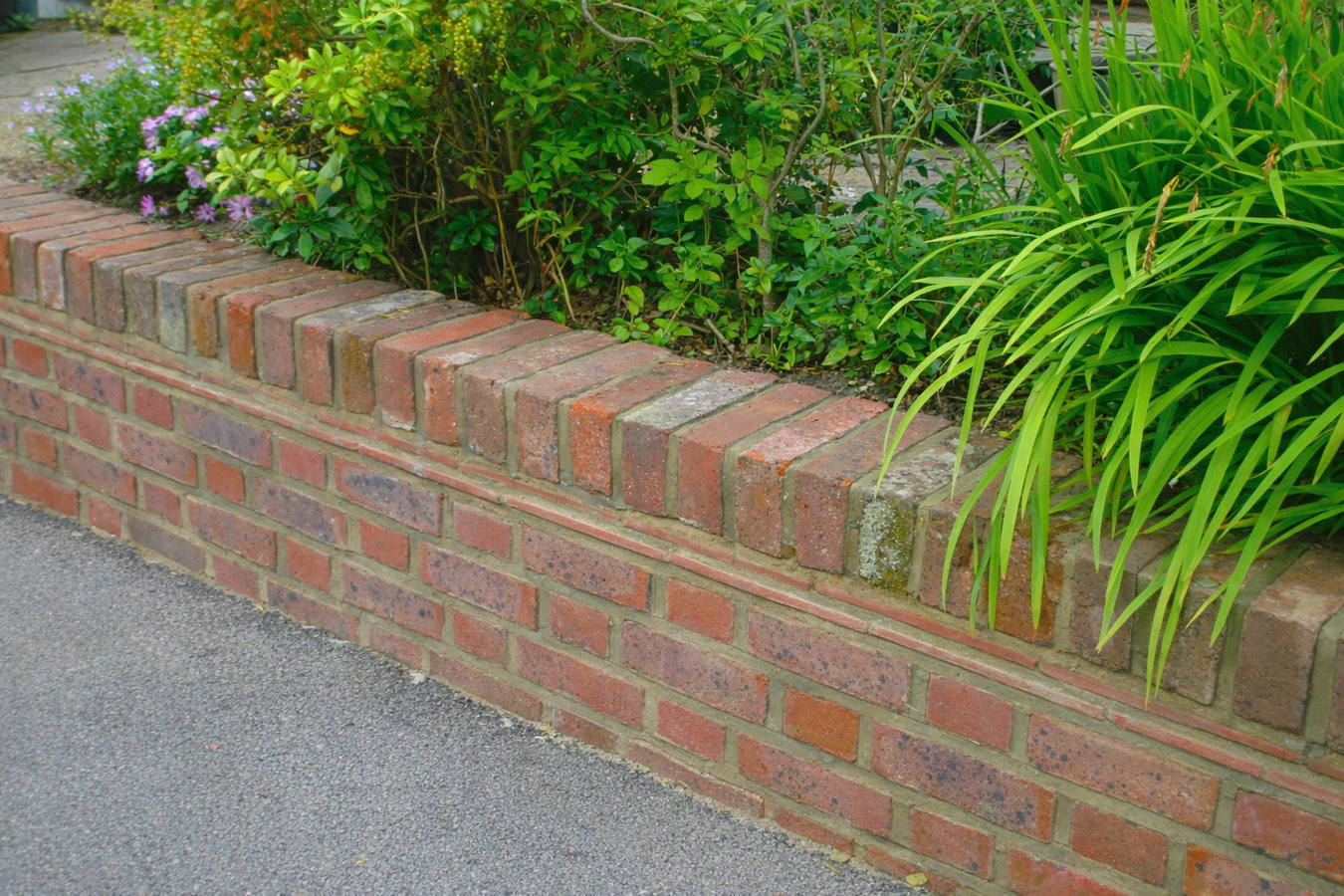
Wood fences rot and blow over. A brick wall built on a proper footing handles Chino's clay soil, Santa Ana winds, and HOA reviews without the replacement cycle.
Brick wall installation in Chino starts with a buried concrete footing - the base that anchors everything - and builds up from there with bricks laid course by course in mortar. A typical residential wall of 30 to 50 feet takes a crew two to five days depending on height and design. The footing is the most critical part: it must go deep enough to reach stable soil, because Chino's clay-heavy ground swells when wet and shrinks when dry, putting steady pressure on anything anchored below the surface.
A well-built brick wall is one of the most durable structures you can add to a property - the Brick Industry Association notes that properly installed brick walls can last 100 years or more with basic maintenance. That durability starts with the mortar: it needs to be mixed correctly and allowed to cure slowly. In Chino's summer heat, mortar dries faster than it should unless the crew actively manages the process - misting bricks, shading the work area, and working in stages. If your project also involves a decorative stone finish or a veneer on an adjacent surface, that work connects with stone masonry - which we can quote in the same site visit.
Most Chino homeowners who contact us are either replacing a wood fence that has blown over or rotted out, adding a boundary or privacy wall as part of a backyard renovation, or repairing an existing brick wall that has started to lean or crack after years of seasonal soil movement.
Stand at one end of your wall and look down its length. If it curves outward or leans toward the street, the wall has likely shifted in the soil - a common result of Chino's clay-heavy ground swelling and contracting over the years. A leaning wall will not correct itself and can fall, creating a safety and liability problem.
Small hairline cracks in mortar are normal over time. But cracks wider than a pencil tip - especially diagonal or stair-step cracks - mean the wall is moving. In Chino, this pattern often appears after a wet winter followed by a dry summer, when the soil beneath the footing swells and then shrinks.
The top of a brick wall is its most exposed point. Without a solid cap, rainwater soaks straight down into the mortar joints. After several wet seasons - even in Chino's relatively dry climate - the mortar erodes from the inside out. If you can scrape mortar out of a joint with your fingernail, the wall needs attention before the damage works deeper.
Chino sits in a wind corridor that funnels Santa Ana winds through the Inland Empire every fall and winter. Wood fences in this area take a beating and often need replacing every 10 to 15 years. A brick wall is a permanent alternative that will not rot, warp, or blow over - and it typically adds more to your property value than a wood fence.
We build garden and boundary walls, privacy walls, decorative accent walls, and brick columns for Chino homeowners. Each project starts with a site visit to check soil conditions, grade changes, and any HOA or city permit requirements before we give you a number. The majority of our brick wall projects in Chino involve replacing wood fences that have failed, adding privacy from neighboring two-story homes, or building out a new outdoor living area in a backyard renovation.
If your project involves a surface that benefits from a brick repair or repointing of existing joints, that work connects with brick repair - which we handle as a standalone service or in combination with new wall construction. For projects where a stone or decorative veneer finish is part of the design, we also provide full stone masonry services that can be integrated into the same project timeline and crew.
For homeowners replacing aging perimeter walls or adding a new property boundary where a wood fence has failed.
For Chino homeowners who want to block sight lines from neighboring two-story homes or reclaim usable outdoor space.
For front-yard or backyard projects where a finished brick surface is part of a larger landscape or hardscape design.
For homeowners who want to add structure to an existing fence line or create a formal entry to their driveway or garden.
Chino sits on clay-heavy soils that expand and contract with every wet and dry season - a cycle that puts consistent stress on masonry footings. A footing that is not deep enough will allow the wall to shift, crack, or lean within a few years of installation. Chino summers also push past 100 degrees from June through September, and that heat is hard on fresh mortar. Experienced local masons schedule summer wall work for early mornings and manage the curing process actively - steps that are easy to skip but make a real difference in how long the wall holds. The Portland Cement Association publishes guidance on mortar curing in hot-weather conditions that covers exactly this issue.
A large share of Chino's residential neighborhoods - particularly those built after 1990 - are governed by homeowners associations with specific rules about wall height, brick color, cap style, and whether a wall can be visible from the street. Homeowners in Rancho Cucamonga, CA face similar HOA review processes in their newer planned communities. We also serve homeowners in Upland, CA who are navigating comparable requirements along the Inland Empire's western edge. We review your HOA's architectural guidelines before designing anything, and we handle the submission so it does not fall to you.
We respond within 1 business day. A masonry wall requires a site visit before we can quote accurately - we need to see the wall location, check the soil, and note any grade changes or nearby structures. The visit is free and takes about 30 to 60 minutes.
You receive a written estimate that breaks down labor, materials, and permit fees. For walls taller than 3 feet, we handle the permit application with the City of Chino - you do not navigate city paperwork yourself. We also discuss your HOA requirements if applicable.
Before any digging starts, we call 811 to have underground utilities marked - required by California law. We then excavate and pour a concrete footing sized for local soil conditions. The footing needs 24 to 48 hours to cure before bricklaying begins.
The crew lays bricks course by course, checking for level constantly. Once complete, the city inspector signs off on the permitted wall. We walk you through the finished surface and explain what to avoid during the curing period - like pressure washing or direct sprinkler contact.
Free written estimate. No obligation. We respond within 1 business day.
(909) 479-6882Our CSLB license covers the full scope of brick wall work in Chino and the Inland Empire. The Brick Industry Association publishes installation standards that govern how a wall should be built - we build to those standards on every project. You can verify our license status on the CSLB website before you commit.
We have installed brick walls throughout Chino - from older neighborhoods where 1960s walls are failing at the footing, to newer subdivisions where clay soil movement is most pronounced. We know what Chino's ground does to masonry and we build footings accordingly.
Many Chino neighborhoods require HOA approval before any wall goes up - and the city requires a permit for walls over 3 feet. We know what both processes require in Chino, and we handle the paperwork so it does not land on your to-do list or delay your project.
We walk the site before quoting - which means we see soil conditions, grade changes, and anything else that could affect cost before you commit to a price. The number you agree to at the start is the number you pay at the end.
A brick wall is one of the few home improvements that essentially never needs to be replaced if it is built correctly. We have been building them in Chino since 2016, and every project we complete comes with a written estimate, a city-permitted finish where required, and a wall that is built to handle what this area throws at it.
Stone masonry for decorative walls, veneers, and accent features that integrate with a new or existing brick structure.
Learn MoreBrick repair and repointing to restore existing brick surfaces that show cracks, crumbling mortar, or moisture damage.
Learn MoreOur calendar fills fast in spring - lock in your start date before the summer heat sets in.