
Loading...
Serving Chino, CA and surrounding areas. (909) 479-6882
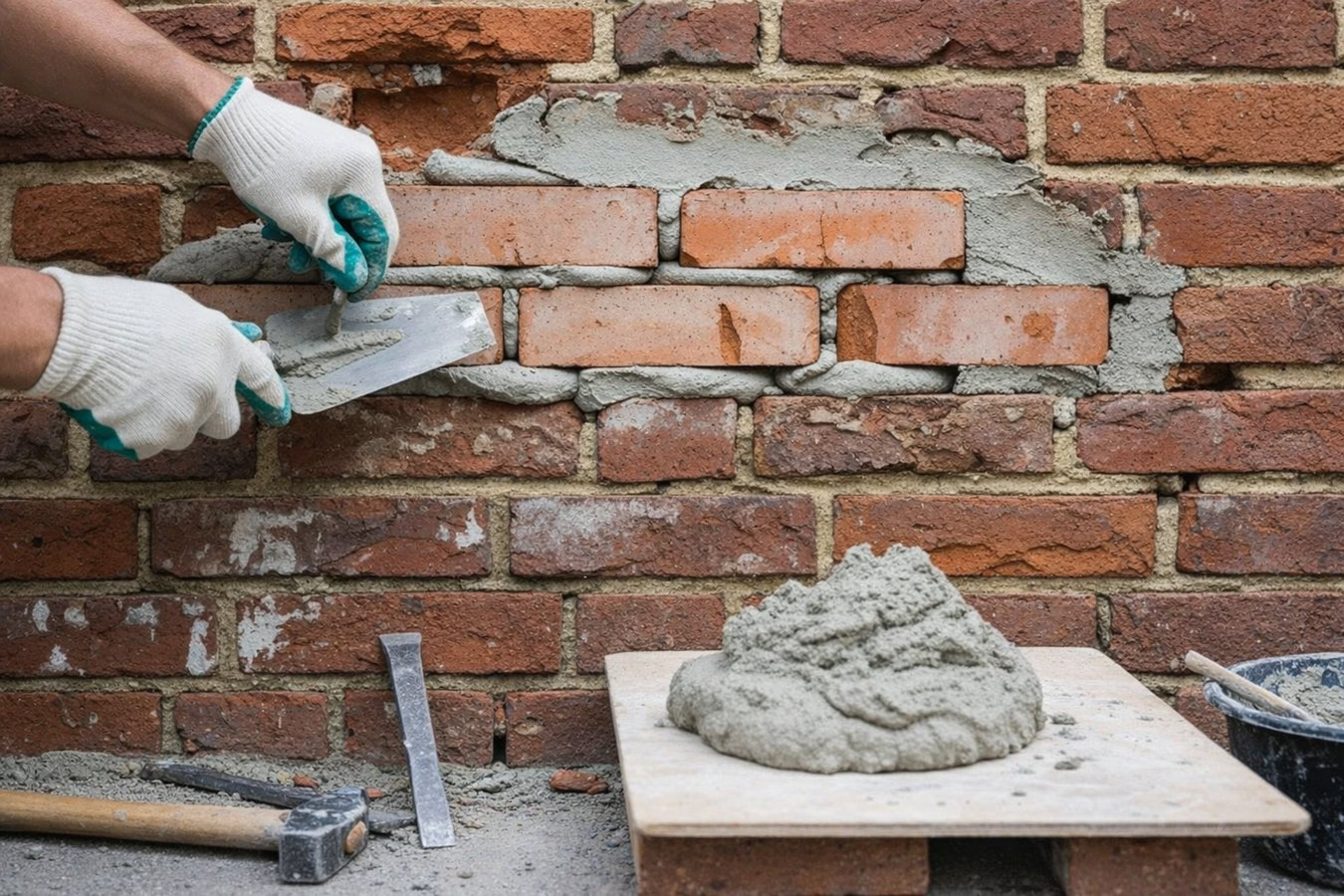
Cracked bricks, spalling surfaces, and failing mortar are not just eyesores - they let water and soil movement do real damage. We fix the problem and source bricks that match your home so the repair does not look like a patch.
Brick repair in Chino means fixing individual damaged bricks, replacing deteriorated mortar joints, or rebuilding small sections of wall - most jobs on a single-family home take one to two days and do not require tearing out the entire structure. Brick is one of the most durable building materials available, but it is not maintenance-free. In Chino, where clay soils shift with every wet and dry season and summer temperatures regularly exceed 95 degrees, brick walls and chimneys face conditions that accelerate the kind of wear most homeowners assume happens slowly over decades.
The most common mistake Chino homeowners make with brick damage is waiting. Small cracks and crumbling mortar do not stay small. Water gets in through the gaps, and in Chino's clay-heavy soil, that moisture has limited drainage options - it migrates through the wall and can reach interior framing before you ever see a water stain on the inside. If your brick chimney is showing signs of wear, a brick repair inspection often overlaps with tuckpointing work - the two services address different parts of the same structure and are often done together.
Brick repair is also the point where material matching matters most. Replacing individual bricks with material that is the wrong size, color, or texture is one of the most visible signs of a rushed contractor. We source a close match before the crew arrives - so from the street, you should not be able to tell where the repair was done.
Run your finger along the joints between bricks on your exterior wall or chimney. If the mortar feels soft, sandy, or crumbles away easily, it is no longer keeping water out. In Chino's dry heat, mortar deterioration happens faster on south- and west-facing walls that get the most afternoon sun.
Chino's clay soils expand and contract with moisture changes, and that movement often shows up as new cracks after a dry summer or a wet winter. Cracks that were not there before - or old cracks that seem wider - are a signal worth acting on before the next seasonal shift makes them worse.
When the outer surface of a brick starts to peel away in thin layers, that is called spalling. It usually means water has been getting in and expanding as it heats up. In Chino, this often happens on bricks that get hit by sprinklers regularly - the repeated wetting and drying cycle breaks down the brick surface over time.
Damp spots on interior walls near a brick fireplace, chimney, or exterior brick wall after rain mean water is finding a path through damaged mortar or cracked bricks. This is one of the clearest signs that repair cannot wait - water inside a wall causes mold, rot, and damage far more expensive than the original brick problem.
The right repair approach depends on what is actually failing. Cracked or spalled bricks that have been weakened by water intrusion or soil movement need to be replaced - fresh mortar around a damaged brick will not save it. Where the bricks themselves are still structurally sound but the joints between them have deteriorated, targeted repointing is the more cost-effective answer. For Chino homeowners dealing with brick chimneys, the two often go hand in hand: spalled bricks at the crown combined with recessed joints near the top means both need attention at the same time.
More extensive damage - sections of wall that have shifted, bowed, or been compromised by water over many seasons - may require rebuilding rather than patching. That is a larger conversation, but one we have with homeowners honestly during the estimate. If your wall also has driveway or walkway brick sections showing similar wear, we can assess those alongside the main structure. Many Chino homeowners find that addressing driveway pavers or related masonry at the same time reduces the total number of contractor visits needed. We also coordinate with adjacent tuckpointing work when the same wall has both brick and mortar issues to address.
For homes where specific bricks are cracked, spalled, or have shifted - matched to the existing color and texture so the repair blends in.
Targeted repair for sections where the mortar has deteriorated but the bricks themselves are still sound - common on Chino homes from the 1980s and 1990s.
Addressing spalled bricks, recessed joints, and structural gaps on chimneys that have taken years of direct sun, wind, and seismic stress.
For areas where damage is extensive enough that patching individual bricks is not practical - full section removal and rebuild with matched materials.
Chino's rapid residential growth between the 1970s and early 2000s means a large share of the city's housing stock was built during the same decade-long window - using similar materials, on similar lots, in the same climate. Many of those homes are now 30 to 50 years old, which is exactly when original brick and mortar reaches the end of its expected lifespan. Brick used in older Chino homes often has a specific size and texture that is no longer standard, which means matching replacement bricks requires sourcing from salvage suppliers or specialty distributors - not just picking something off a pallet. Homeowners in Chino Hills, CA and Montclair, CA face similar housing age and material matching challenges.
Chino also sits in an active seismic zone, and even minor tremors can loosen bricks that were already weakened by age or soil movement. After any noticeable earthquake, it is worth having your brick walls and chimney inspected - small shifts that look minor on the surface can hide more significant movement underneath. The International Masonry Institute provides guidance on evaluating masonry after seismic events - your contractor should know how to assess whether a repair is sufficient or whether a structural engineer needs to weigh in first.
We respond within 1 business day. Describe what you are seeing - cracked bricks, spalling, gaps, or water staining - and we come prepared to assess the full picture, not just the spot you noticed first.
We examine the damaged area closely, check the surrounding brickwork for signs of wider problems, and identify the likely cause - whether it is soil movement, water intrusion, age, or seismic activity. We take note of brick color and texture to source a close match.
The crew removes loose or damaged bricks and old mortar, prepares the surface, and sets replacement bricks in fresh mortar matched to your existing wall. Most jobs are done in one to two days. The work area will be dusty during removal - normal for this type of job.
We walk the finished repair with you before packing up. Fresh mortar needs about a week to cure - avoid running sprinklers directly on the repaired area and do not pressure-wash the surface for at least 28 days.
We respond within 1 business day. A free on-site estimate tells you exactly what you are dealing with - whether it is a simple mortar patch or a wall section that needs rebuilding. No pressure to book, no obligations.
(909) 479-6882Every masonry contractor working for a fee in California must hold a valid CSLB license. Ours covers the full scope of brick repair, repointing, and wall rebuilding in Chino and throughout the Inland Empire. You can verify our license number on the CSLB website before you call.
Chino's housing stock includes homes from the 1950s through the 2000s, and older bricks are often no longer standard. We source a close match before the crew arrives - so the finished repair blends in rather than standing out like a patch from the street.
Chino's clay soils and seismic activity mean the same cracks can come back if the underlying cause is not addressed. We look at the cracking pattern before we repair anything and tell you honestly whether soil movement, water intrusion, or structural shifting is contributing to the damage.
A large share of Chino's neighborhoods are HOA-governed, and exterior repairs typically require prior written approval. We are familiar with the documentation most local HOAs require and can help you understand what to submit before work begins - so you are not hit with a fine or a redo.
The Brick Industry Association publishes standards for brick replacement and mortar matching - we follow those standards on every job, and we walk every Chino homeowner through the finished repair so you know exactly what was done.
Paver installation and repair for driveways using brick, concrete, and natural stone - a natural pairing when brick repair work is already underway on your property.
Learn MoreTargeted mortar joint restoration for walls and chimneys where the bricks are still sound but the mortar between them has deteriorated.
Learn MoreWater through cracked bricks and failing mortar causes damage that compounds quickly - a free estimate now tells you exactly what needs fixing.